
 English
 中文简体
中文简体
Search By Posts
Product Category
Industry News
 By Admin
Beyond Moisturizing: Why 1,2-Hexanediol is the Backbone of "Preservative-Free" Claims
Content
What is 1,2-Hexanediol in Modern Cosmetics?
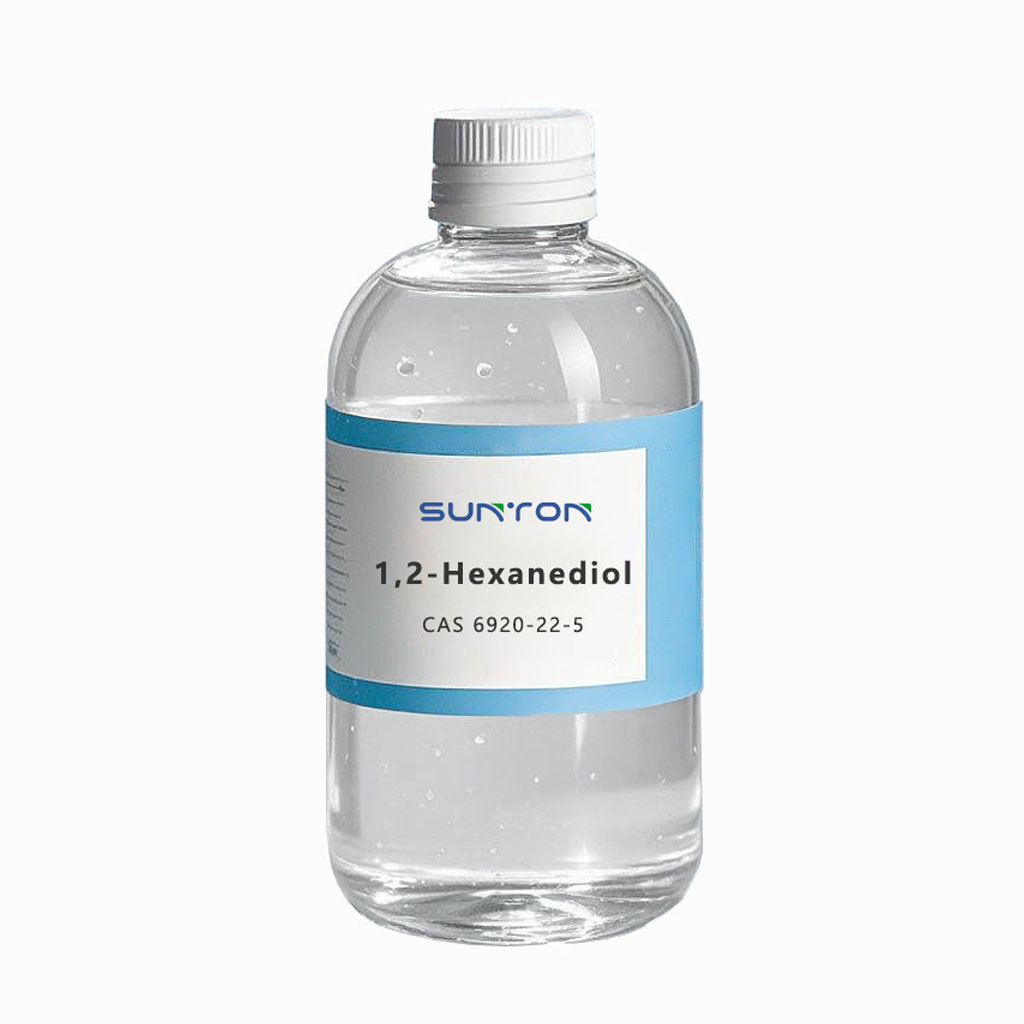
1,2-Hexanediol is a multifunctional glycol used primarily as a preservative booster and humectant in personal care products.
Key Technical Specifications:
-
CAS Number: 6920-22-5
-
Appearance: Clear, colorless liquid.
-
Purity: Industrial standard is >99.0%; High-end Cosmetic Grade is >99.5%.
-
Solubility: Fully miscible in water and various organic solvents.
-
Source: [Link to Jiangsu Suoteng 1,2-Hexanediol TDS]
Why is 1,2-Hexanediol Essential for Formulators Today?
It is essential because it solves the "Preservative Paradox": consumers want products with a long shelf-life but refuse to buy products containing parabens, formaldehyde donors, or even phenoxyethanol.
1,2-Hexanediol bridges this gap. It is not legally classified as a preservative in many jurisdictions (including the EU and China), yet it exhibits strong antimicrobial activity. By adding 1.5% to 3.0% of 1,2-Hexanediol, a formulator can significantly lower the dosage of other preservatives, reducing the risk of skin irritation. Data shows that formulations using 1,2-Hexanediol as a booster can pass Challenge Tests (PET) with 50% less phenoxyethanol than standard controls.
-
Source: [Link to Journal of Applied Microbiology: Diols as Antimicrobials]
When Should I Switch to 1,2-Hexanediol?
You should integrate 1,2-Hexanediol into your supply chain in three specific scenarios:
1. Developing "Sensitive Skin" or Baby Care Lines
If your target audience reads labels and fears irritation, this is your go-to. Unlike short-chain alcohols (ethanol) that dry the skin, 1,2-Hexanediol hydrates.
2. Formulating Sheet Masks and Wet Wipes
These high-water-content products are breeding grounds for bacteria.
3. Stabilizing Clear Serums
When you need a crystal-clear formulation without the cloudiness that some oily preservatives cause, 1,2-Hexanediol acts as a co-solvent, helping to dissolve other difficult ingredients (like fragrances or plant extracts) while keeping the solution transparent.
Part 2: Mechanism, Quality Traps, and Procurement Advice
How Does 1,2-Hexanediol Actually Work?
It works through a mechanism known as membrane disruption.
Chemically, it is an amphiphilic molecule:
-
The Hydrophilic Head: The two hydroxyl groups (-OH) grab onto water molecules (humectant effect).
-
The Lipophilic Tail: The six-carbon chain loves oil.
The Action: The carbon chain penetrates the cell walls of bacteria and fungi, increasing the permeability of the cell membrane. This causes the microorganism to leak essential nutrients and eventually die. Because it attacks the physical structure of the bacteria, it boosts the efficacy of other preservatives, allowing them to enter the cell more easily.
What Are the Trade-offs (Pros vs. Cons)?
Switching to 1,2-Hexanediol involves balancing budget against label appeal.
The Advantages:
-
"Clean" Labeling: Allows you to remove controversial ingredients like Parabens or Triclosan.
-
Sensory Feel: It reduces the tacky/sticky feel of Glycerin. If your serum feels too sticky, replacing some Glycerin with 1,2-Hexanediol improves the texture.
-
Compatibility: It works over a wide pH range and temperature, unlike some acid-based preservatives.
The Disadvantages:
-
Cost: It is significantly more expensive per kilogram than traditional preservatives like Sodium Benzoate.
-
Dosage: You need higher percentages (2-3%) compared to potent preservatives (0.5%), which impacts the cost of goods sold (COGS).
-
Odor Risk: Low-quality grades have a distinct, unpleasant chemical smell.
What Should I Watch Out For When Buying? (The "Sniff Test")
The single biggest risk with 1,2-Hexanediol is residual odor.
1. The Purity Trap
If a supplier offers you a price that seems too good to be true, smell the sample. Lower purity grades (often recycled or poorly distilled) contain by-products that smell like solvent or burnt plastic.
-
Impact:You cannot mask this smell in fragrance-free products. A bad batch of 1,2-Hexanediol will ruin your entire production run of face cream.
-
Requirement:Always specify "Odorless / Cosmetic Grade" and demand a Gas Chromatography (GC) purity of >99.5%.
2. Solubility Issues at Low Temperatures
While generally stable, if stored in freezing conditions during transit, it can solidify (melting point is roughly -20°C, but viscosity increases).
-
Guideline:Ensure your warehouse keeps it at standard room temperature to ensure it pours easily into the mixing tank.
3. Regulatory Limits
While "safe," China's NMPA and other global bodies monitor usage rates.
-
Advice:Stick to the recommended usage rate of 0.5% to 3.0%. Going higher rarely adds benefit and only adds cost.
-
Source: [Link to Personal Care Products Council: Safety Assessment of 1,2-Glycols]
NEXT:The Industrial Manager’s Guide to Benzoyl Peroxide (BPO)
Recommended products
-
2,3-Dimethyl-2,3-Diphenylbutane (Dicumene)
-
Benzene,1,4-bis(1-methylethyI)-,Homopolymer
-
2-Hydroxyethylhydrazine
-
Acethydrazide
-
Tert-Butyl peroxybenzoate(TBPB)
-
Benzoyl Peroxide(BPO)
-
1,2-Hexanediol
-
Pentylene Glycol
-
Caprylohydroxamic Acid
-
Melamine Cyanurate
-
Di-Tert-Butyl Peroxide(DTBP)
-
XPS Special Masterbatch
COMPANY PROFILE
CONTACT INFO
- Phone: +86 18114870532
- Tel: +86 510-86686637
- Email: [email protected]
- Add: No.5 Shuangquan village, Diaoqi village., Xuxiake Town, Jiangyin, Jiangsu, China

Copyright © Jiangsu Suoteng New Material Technology Co., Ltd. All Rights Reserved.Custom Chemicals Organic Compounds Manufacturers
 Disclaimer
Privacy
苏ICP备2024090995号
Disclaimer
Privacy
苏ICP备2024090995号