
 English
 中文简体
中文简体
Search By Posts
Product Category
Industry News
 By Admin
Dicumene (2,3-Dimethyl-2,3-diphenylbutane): Flame Retardant Uses & Chemistry
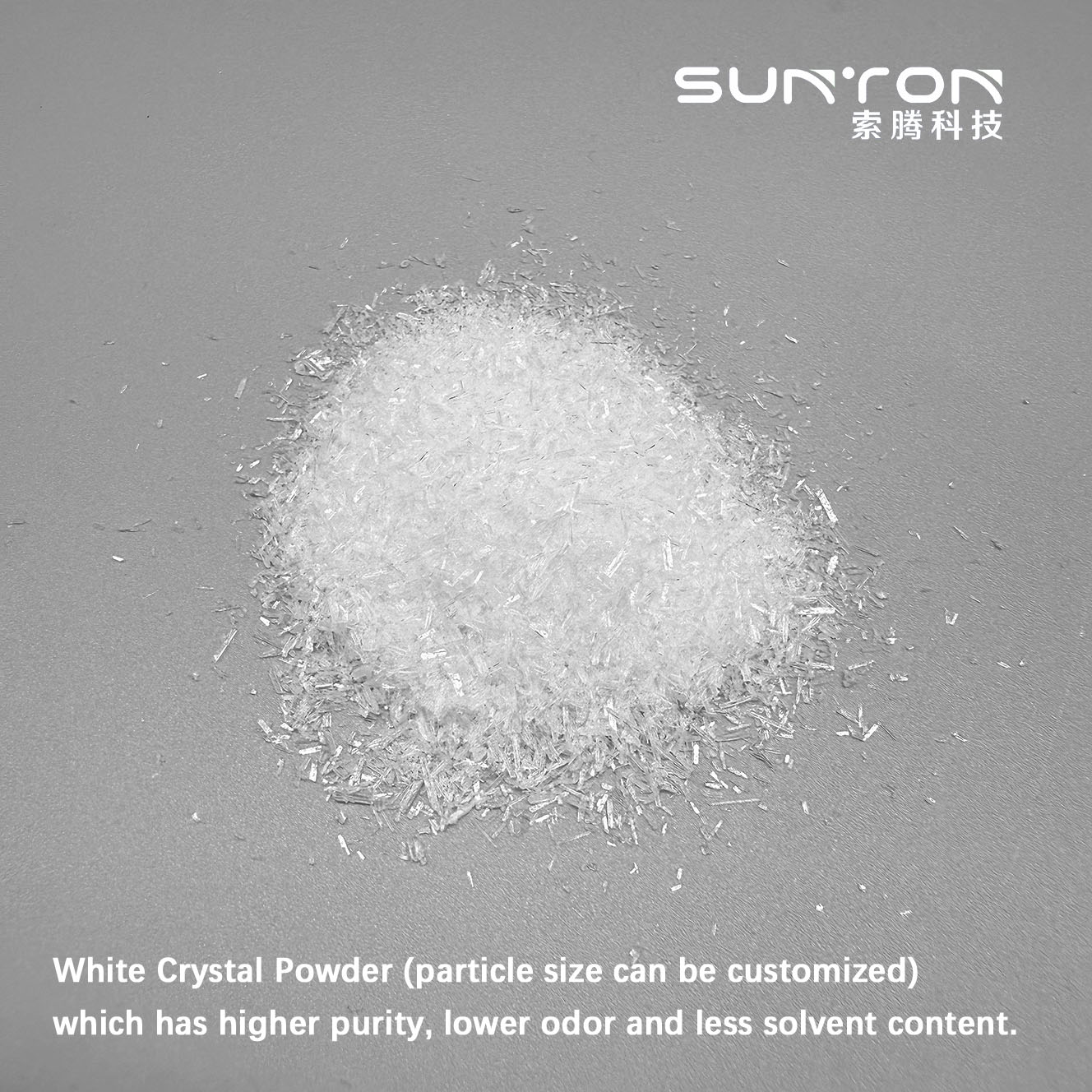
Content 2,3-Dimethyl-2,3-diphenylbutane — commonly known by its trade name Dicumene or systematically as bicumene — is an organic compound with the molecular formula C₁₆H₂₀ and CAS number 1889-67-4. It belongs to the class of diarylalkanes and is structurally characterized by two cumyl groups (α-methylbenzyl moieties) joined at their tertiary carbon atoms, forming a symmetrical molecule with a central C–C bond of unusually low dissociation energy. This weak central bond — with a bond dissociation energy of approximately 155–160 kJ/mol, considerably lower than a typical C–C bond at 345 kJ/mol — is the defining feature of the compound and the source of its commercial value. When heated, 2,3-dimethyl-2,3-diphenylbutane undergoes homolytic cleavage of this bond to generate two cumyl radicals (1-methyl-1-phenylethyl radicals) with high efficiency and at precisely controllable temperatures. This radical-generating behavior underpins its use in polymer processing, flame retardant systems, and specialty chemical synthesis. The compound is a white to off-white crystalline solid at room temperature with a melting point of 86°C–88°C and a molecular weight of 212.33 g/mol. It is soluble in common organic solvents including toluene, xylene, and chlorinated solvents, and practically insoluble in water. Commercial grades typically achieve purity above 98% by GC analysis. The primary industrial application of 2,3-dimethyl-2,3-diphenylbutane in the flame retardant field exploits its radical-generating thermolysis. In polymer systems subject to combustion, fire propagation is sustained by a chain reaction of hydrogen and hydroxyl radicals in the gas phase above the burning surface. Flame retardants operating through the radical scavenging (gas-phase) mechanism interrupt this chain reaction by introducing competing radical species that terminate the combustion cycle before it can sustain itself. When a polymer matrix containing dicumene reaches ignition-relevant temperatures, the compound cleaves to produce cumyl radicals. These radicals react preferentially with the active flame propagation intermediates (H• and OH• radicals), effectively quenching the combustion chain reaction. Because the thermolysis onset temperature of dicumene — approximately 120°C–150°C at processing-relevant timescales — can be tuned by formulation and because the compound does not contain halogens, it is classified as a non-halogenated radical-based flame retardant, a category of growing commercial interest as regulatory pressure on brominated and chlorinated flame retardants intensifies globally. One of the most technically important applications of dicumene is as a co-agent or initiator modifier in peroxide-crosslinked polyolefin flame retardant formulations. In polyethylene (PE) and polypropylene (PP) compounds used for wire and cable insulation, crosslinking with organic peroxides is performed simultaneously with flame retardant incorporation during extrusion or subsequent heat curing. Dicumene functions in this context as a co-crosslinking agent and radical buffer — moderating the crosslink density, reducing premature scorch during extrusion, and contributing its own radical population to the flame retardant mechanism once the cable is in service and exposed to fire. Wire and cable compounds for low-smoke zero-halogen (LSZH) applications — a market driven by building codes and transportation sector fire safety standards in Europe, Japan, and increasingly North America — represent the highest-volume end use for dicumene in flame retardant formulations. LSZH cables must meet both flame spread and smoke density requirements without the halogenated compounds that dominated earlier generations of fire-retardant cable insulation. Dicumene is rarely used as the sole flame retardant in commercial formulations. It is typically employed as a synergist alongside mineral-based flame retardants — most commonly aluminium trihydrate (ATH) or magnesium hydroxide (MDH) — which act through an endothermic decomposition and water release mechanism to cool the substrate and dilute combustible gases. The combination of a condensed-phase cooling mechanism (ATH/MDH) with a gas-phase radical scavenging mechanism (dicumene) produces a synergistic effect that achieves target flame retardant ratings at lower total additive loadings than either component alone, preserving more of the polymer's mechanical properties in the final compound. Typical loading levels of dicumene in such synergistic systems range from 1–5 parts per hundred resin (phr) alongside 40–150 phr of ATH or MDH, depending on the polymer matrix and the target UL 94 or IEC 60332 rating required. Flame retardants are a chemically diverse class of additives incorporated into polymers, textiles, coatings, and construction materials to reduce ignitability, slow flame spread, and limit heat release. Global flame retardant consumption exceeds 2.5 million metric tonnes annually, with demand driven by building and construction regulations, electrical and electronic equipment standards, and transportation sector fire safety requirements. Flame retardant mechanisms fall into four broad categories, often operating simultaneously in a single formulation: The regulatory environment for flame retardants has shifted substantially over the past two decades. Polybrominated diphenyl ethers (PBDEs) — formerly the dominant halogenated flame retardants in electronics and foam applications — are now restricted or banned under the EU RoHS Directive, the Stockholm Convention on Persistent Organic Pollutants, and equivalent regulations in North America and Asia-Pacific. Hexabromocyclododecane (HBCDD) and certain short-chain chlorinated paraffins have been similarly restricted. The combined effect is a sustained market shift toward non-halogenated alternatives, including phosphorus-based systems, intumescent formulations, mineral hydrates, and radical-based organic compounds such as dicumene. This regulatory trajectory has driven significant R&D investment in the flame retardant sector. Non-halogenated systems that can match the performance of brominated retardants at equivalent or lower loadings — while maintaining polymer processability and mechanical properties — command substantial price premiums and are among the fastest-growing segments in the global flame retardant market, projected to exceed USD 14 billion by 2030. Despite its relatively mild handling profile compared to liquid organic peroxides, 2,3-dimethyl-2,3-diphenylbutane requires appropriate storage and handling procedures to maintain product integrity and ensure workplace safety. As a radical precursor that undergoes thermolysis above its activation threshold, dicumene must be stored away from heat sources and strong oxidizing agents. Recommended storage temperature is below 30°C in a dry, well-ventilated area, away from direct sunlight. The compound is not classified as self-reactive or explosive under UN transport regulations in its solid crystalline form, which distinguishes it from peroxide-based radical initiators that require temperature-controlled shipping and storage. In occupational exposure terms, the primary hazard is dust inhalation during handling of the crystalline powder. Respiratory protection (minimum FFP2 filtering facepiece) and skin/eye protection are standard requirements during weighing and compounding operations. The compound should be treated as a potential combustible dust in enclosed processing environments where fine particle accumulations could occur — standard industrial housekeeping and dust control practices apply. Suppliers of commercial dicumene provide Safety Data Sheets (SDS) conforming to GHS/UN recommendations, including detailed toxicological data, first aid measures, and disposal guidance. Buyers integrating the compound into polymer formulations for regulated end markets (wire and cable, electronics, construction materials) should maintain full SDS documentation and conduct substance screening against applicable restricted substance lists — including EU REACH SVHC candidate list and IEC 62474 — as part of their product compliance workflow.What Is 2,3-Dimethyl-2,3-diphenylbutane?
Dicumene as a Flame Retardant: Mechanism and Applications
Use in Cross-Linked Polyolefin Systems
Synergistic Flame Retardant Systems
Broader Context: Flame Retardant Chemistry and Regulatory Landscape
Regulatory Drivers Shifting Demand Toward Non-Halogenated Systems
Flame Retardant Type
Primary Mechanism
Typical Loading (phr)
Regulatory Status
Brominated (e.g. TBBPA, DBDPE)
Gas-phase radical scavenging
5–20
Restricted (some grades); under review
Aluminium trihydrate (ATH)
Endothermic / water release
40–150
Unrestricted; widely approved
Magnesium hydroxide (MDH)
Endothermic / water release
40–120
Unrestricted; widely approved
Organophosphorus (e.g. APP, RDP)
Char formation / intumescence
15–30
Unrestricted (halogen-free grades)
Dicumene (2,3-dimethyl-2,3-diphenylbutane)
Gas-phase radical scavenging
1–5 (as synergist)
Non-halogenated; no current restrictions
Handling, Storage, and Safety Considerations for Dicumene
NEXT:Dicumene & Melamine Cyanurate Flame Retardant Performance Guide
Recommended products
-
2,3-Dimethyl-2,3-Diphenylbutane (Dicumene)
-
Benzene,1,4-bis(1-methylethyI)-,Homopolymer
-
2-Hydroxyethylhydrazine
-
Acethydrazide
-
Tert-Butyl peroxybenzoate(TBPB)
-
Benzoyl Peroxide(BPO)
-
1,2-Hexanediol
-
Pentylene Glycol
-
Caprylohydroxamic Acid
-
Melamine Cyanurate
-
Di-Tert-Butyl Peroxide(DTBP)
-
XPS Special Masterbatch
COMPANY PROFILE
CONTACT INFO
- Phone: +86 18114870532
- Tel: +86 510-86686637
- Email: [email protected]
- Add: No.5 Shuangquan village, Diaoqi village., Xuxiake Town, Jiangyin, Jiangsu, China

Copyright © Jiangsu Suoteng New Material Technology Co., Ltd. All Rights Reserved.Custom Chemicals Organic Compounds Manufacturers
 Disclaimer
Privacy
苏ICP备2024090995号
Disclaimer
Privacy
苏ICP备2024090995号