
 English
 中文简体
中文简体
Search By Posts
Product Category
Industry News
 By Admin
Di-Tert-Butyl Peroxide (DTBP): Properties, Applications & Safe Handling Guide
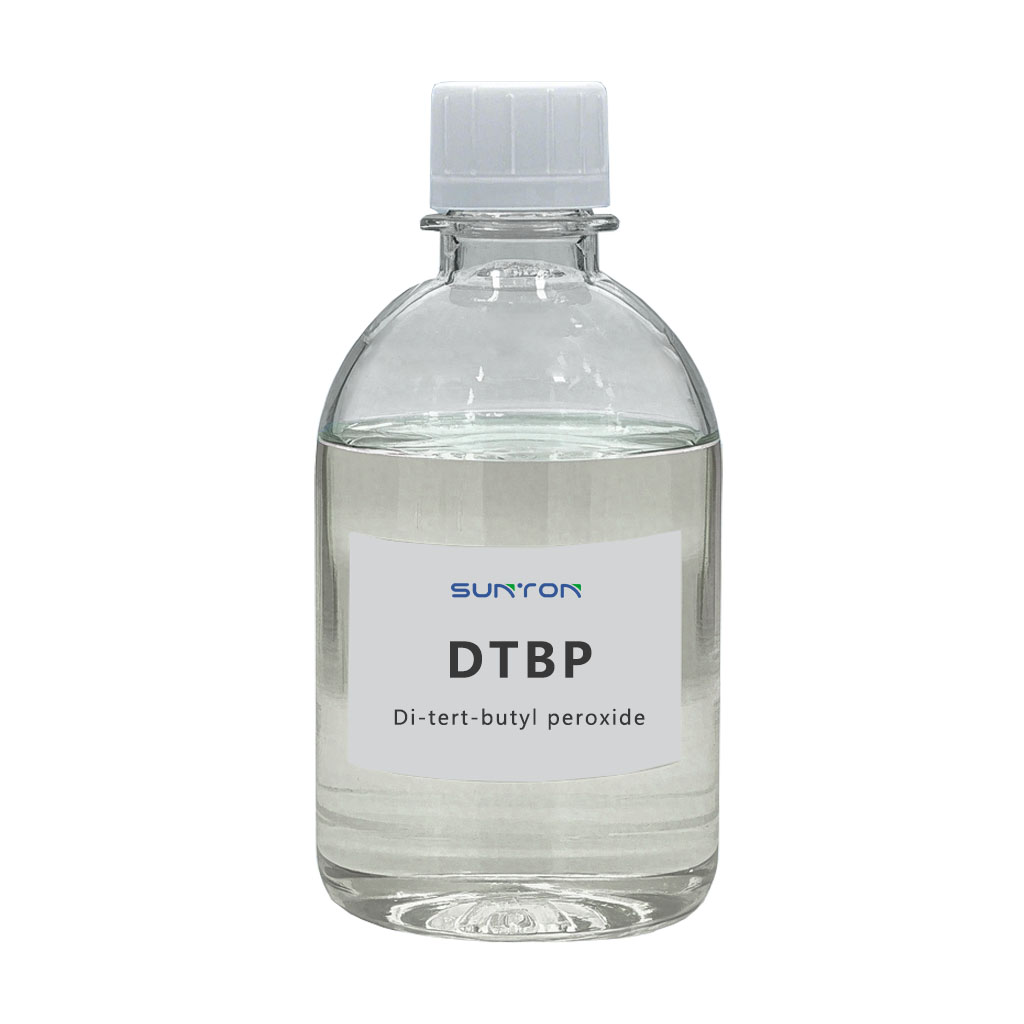
Content Di-Tert-Butyl Peroxide (DTBP), with the chemical formula (CH₃)₃C–O–O–C(CH₃)₃ and CAS number 110-05-4, is a dialkyl peroxide widely used as a free-radical initiator and high-temperature crosslinking agent. It is a colorless to light yellow liquid with a mild, distinctive odor, a molecular weight of 146.23 g/mol, and a half-life of 10 hours at approximately 126°C — making it one of the most thermally stable organic peroxides commercially available. Unlike diacyl peroxides or peroxyesters, DTBP decomposes cleanly into tert-butoxy radicals and ultimately acetone and methane, producing no acidic byproducts. This clean decomposition profile makes it especially valuable in processes where residual acidity would degrade product quality or corrode equipment. Global demand for organic peroxides — of which DTBP is a key segment — exceeded 350,000 metric tons per year as of recent estimates, driven by growth in polymer processing, fuel additives, and specialty chemical synthesis. Understanding the properties of DTBP is essential for selecting it over alternative initiators and for safe handling in production environments. DTBP is miscible with most organic solvents and practically insoluble in water, which facilitates its use as a neat reagent or blended into hydrocarbon carriers. Its relatively low active oxygen content (10.95%) compared to peroxyesters results in a gentler, more controllable radical flux — an advantage in sensitive polymer formulations where uncontrolled crosslinking would cause defects. DTBP is extensively employed as a crosslinking agent for polyethylene (PE), ethylene-propylene rubbers (EPR/EPDM), and silicone elastomers. In wire and cable insulation, it enables crosslinked polyethylene (XLPE) to achieve significantly improved heat resistance, mechanical strength, and long-term electrical performance compared to uncrosslinked PE. Typical use levels range from 1–3 phr (parts per hundred resin), processed at temperatures above 160°C to ensure full decomposition and radical generation. In silicone rubber vulcanization, DTBP is preferred for transparent or light-colored articles because its decomposition produces no staining byproducts — a limitation of some benzoyl peroxide-based systems. One of the fastest-growing application areas for DTBP is as a cetane number improver in diesel fuel. At treat rates of 500–2,000 ppm, DTBP can raise the cetane number of diesel by 3–8 points, improving combustion efficiency, reducing ignition delay, and lowering cold-start emissions. This application has gained renewed attention as refineries blend higher proportions of low-cetane components (e.g., hydrotreated vegetable oils, Fischer-Tropsch distillates) into the diesel pool to meet low-sulfur and renewable fuel mandates. Compared to 2-ethylhexyl nitrate (2-EHN), DTBP contains no nitrogen, which offers an advantage in emission profiles — particularly relevant in markets with strict NOx regulations. Due to its high decomposition temperature, DTBP is the initiator of choice for high-temperature bulk and solution polymerizations of styrene, acrylates, and vinyl acetate, particularly where low-temperature initiators would decompose prematurely during compounding or melt processing. It is also used to initiate the copolymerization of ethylene at high pressure in LDPE autoclave reactors. In fine chemical and pharmaceutical manufacturing, DTBP serves as a source of tert-butoxy radicals for selective C–H functionalization reactions. It is used in the synthesis of tert-butyl esters, oxidative coupling reactions, and as a mild oxidant in metal-catalyzed cross-coupling chemistry — including C–N and C–O bond formation under transition-metal catalysis. Choosing the right peroxide initiator requires balancing decomposition temperature, radical efficiency, byproduct profile, and cost. Below is how DTBP compares with commonly used alternatives: DTBP's advantage over DCP lies in its absence of malodorous decomposition products — a critical factor in food-contact or medical-grade elastomer production. Against BPO, its higher thermal stability enables use in melt-phase processing above 150°C without premature activation during compounding. DTBP is classified as a flammable liquid (UN 2102, Class 3) under international transport regulations, with a flash point of approximately 18°C. Despite its relatively high thermal stability among organic peroxides, it must be stored in accordance with established safety protocols: From a regulatory standpoint, DTBP is registered under REACH (EC No. 202-679-4) and listed on major national inventories including China's IECSC, the US TSCA inventory, and the EU's EINECS. It is not currently classified as a substance of very high concern (SVHC), though SDS documentation must comply with GHS requirements in all jurisdictions. In food-contact polymer applications (e.g., XLPE pipes for potable water), processors should verify compliance with applicable migration limits under FDA 21 CFR or EU Regulation 10/2011, as residual decomposition products — primarily acetone — may be subject to migration testing. DTBP is primarily used as a free-radical initiator for crosslinking polyethylene and rubber, as a high-temperature polymerization catalyst, and as a cetane number improver in diesel fuel formulations. DTBP has a slightly higher decomposition temperature and produces odorless byproducts (acetone and methane), making it preferable for light-colored or odor-sensitive applications. DCP is generally more cost-effective for standard EPDM and PE crosslinking where odor is not a concern. DTBP is a flammable liquid that requires standard peroxide handling precautions — proper ventilation, grounding during transfer, and storage below 40°C away from ignition sources. It has a relatively favorable safety profile compared to lower-temperature peroxides, as it does not detonate under normal conditions and is classified as a non-self-reactive substance in bulk transport. Upon thermal decomposition, DTBP yields tert-butoxy radicals, which further fragment into acetone and methyl radicals. The final volatile products are acetone and methane — both non-acidic and non-staining, which is an advantage in many polymer applications. DTBP should be stored below 40°C in a cool, well-ventilated area. Unlike some organic peroxides that require refrigerated storage, DTBP is stable at ambient temperatures provided it is kept away from heat sources and incompatible chemicals.What Is Di-Tert-Butyl Peroxide and Why Does It Matter in Industry
Key Physical and Chemical Properties
Property
Value
CAS Number
110-05-4
Molecular Formula
C₈H₁₈O₂
Molecular Weight
146.23 g/mol
Appearance
Colorless to pale yellow liquid
Boiling Point
109–111°C
Flash Point
18°C (closed cup)
Density
~0.794 g/cm³ at 20°C
Self-Accelerating Decomposition Temp (SADT)
~80°C (bulk)
Active Oxygen Content
10.95%
Half-Life at 130°C
~6.6 hours
Primary Industrial Applications of DTBP
Polymer Crosslinking and Vulcanization
Fuel and Lubricant Additive (Cetane Improver)
Polymerization Initiator in Specialty Resins
Chemical Synthesis Intermediate
DTBP vs. Other Organic Peroxide Initiators: Comparative Selection Guide
Peroxide
10-hr Half-Life Temp
Byproducts
Typical Use
DTBP
~126°C
Acetone, methane (non-acidic)
XLPE, silicone rubber, cetane improver
Dicumyl Peroxide (DCP)
~117°C
Acetophenone, cumyl alcohol (odor)
PE/rubber crosslinking
Benzoyl Peroxide (BPO)
~73°C
Benzoic acid (acidic, staining)
Acrylate polymerization, adhesives
TBHP (tert-Butyl Hydroperoxide)
~171°C
tert-Butanol (water-soluble)
Oxidation catalysis, emulsion polymerization
Storage, Handling, and Regulatory Considerations
Frequently Asked Questions About Di-Tert-Butyl Peroxide
NEXT:Melamine Cyanurate: The Ultimate Flame Retardant Guide | Properties, Applications & Supplier Insights
Recommended products
-
2,3-Dimethyl-2,3-Diphenylbutane (Dicumene)
-
Benzene,1,4-bis(1-methylethyI)-,Homopolymer
-
2-Hydroxyethylhydrazine
-
Acethydrazide
-
Tert-Butyl peroxybenzoate(TBPB)
-
Benzoyl Peroxide(BPO)
-
1,2-Hexanediol
-
Pentylene Glycol
-
Caprylohydroxamic Acid
-
Melamine Cyanurate
-
Di-Tert-Butyl Peroxide(DTBP)
-
XPS Special Masterbatch
COMPANY PROFILE
CONTACT INFO
- Phone: +86 18114870532
- Tel: +86 510-86686637
- Email: [email protected]
- Add: No.5 Shuangquan village, Diaoqi village., Xuxiake Town, Jiangyin, Jiangsu, China

Copyright © Jiangsu Suoteng New Material Technology Co., Ltd. All Rights Reserved.Custom Chemicals Organic Compounds Manufacturers
 Disclaimer
Privacy
苏ICP备2024090995号
Disclaimer
Privacy
苏ICP备2024090995号