
 English
 中文简体
中文简体
Search By Posts
Product Category
Industry News
 By Admin
XPS Special Masterbatch Guide: Types, Dosage & Compatibility
An XPS special masterbatch is a concentrated additive pellet — combining pigments, flame retardants, nucleating agents, or other functional compounds in a carrier resin — that's dosed into extruded polystyrene during processing to modify the foam's color, fire performance, or cell structure without needing to handle raw powder additives directly. Choosing the wrong masterbatch type, carrier resin, or dosage rate is one of the most common causes of inconsistent cell structure and surface defects in XPS board production. Content In solid plastic extrusion or injection molding, masterbatch primarily affects color and a few mechanical properties. In XPS production, however, the extrusion process involves a blowing agent expanding the polystyrene melt into a closed-cell foam structure — and any additive introduced via masterbatch interacts directly with that foaming process. A masterbatch with poor dispersion or an incompatible carrier resin can disrupt nucleation site formation, leading to uneven cell sizes, larger-than-target cells, or localized density variations across the board. This is why XPS-specific masterbatches are formulated differently from general-purpose plastic masterbatches — the carrier resin needs to melt and disperse at temperatures compatible with the XPS extrusion profile, and the additive particle size needs to be fine enough not to interfere with the uniform distribution of blowing agent throughout the melt. XPS masterbatches are generally categorized by the primary function they add to the foam board, and a single production line may dose multiple masterbatch types simultaneously depending on the target product specification. Dosage ranges above are general starting points — actual rates depend heavily on the specific masterbatch's active ingredient concentration, the target board density, and the line speed, and are typically fine-tuned through trial runs before full production. Flame retardant masterbatches for XPS typically carry brominated compounds such as HBCD alternatives or polymeric flame retardants, dispersed in a polystyrene or compatible carrier resin. Because flame retardant additives are often used at higher loading percentages than color or nucleating masterbatches, they have a more noticeable effect on the melt viscosity and, by extension, on cell formation. Several practical effects are worth monitoring when introducing or changing a flame retardant masterbatch: The carrier resin — the base polymer that the active additives are pre-dispersed into during masterbatch manufacturing — needs to be compatible with the general-purpose polystyrene (GPPS) or high-impact polystyrene (HIPS) used in XPS production. A mismatched carrier resin, even one that's chemically similar, can create micro-domains within the melt that don't fully blend, showing up as streaks, specks, or localized density variations in the finished board. Pellet size and shape also affect how evenly a masterbatch disperses, particularly when dosing equipment relies on gravimetric or volumetric feeders calibrated for a specific pellet size range. Masterbatch pellets that are significantly smaller or larger than the base resin pellets can lead to inconsistent feeding ratios over time, especially as feeder hoppers run low and pellet segregation by size becomes more pronounced. Before committing to a new masterbatch supplier or formulation for ongoing production, running a trial batch and evaluating the resulting board for color consistency, cell structure under magnification, and density variation across the board width is the most reliable way to confirm compatibility — relying solely on the masterbatch's technical data sheet without a production-line trial often misses interaction effects that only appear at actual processing conditions.Why Masterbatch Form Matters More in XPS Than in Solid Plastics
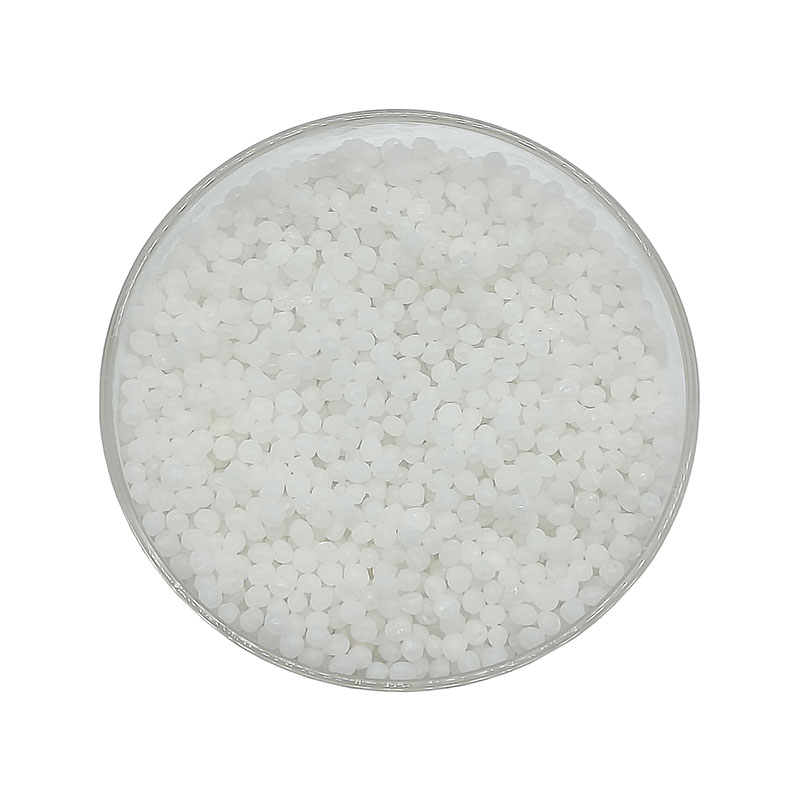
Common Types of XPS Special Masterbatch and Their Function
Masterbatch Type
Primary Function
Typical Dosage Range
Color masterbatch
Provides consistent board color (commonly gray, blue, pink)
0.5–2% by weight
Flame retardant masterbatch
Improves fire performance to meet B1/B2 or similar classifications
2–6% by weight
Nucleating agent masterbatch
Controls and refines foam cell size and uniformity
0.2–1% by weight
Anti-aging / UV stabilizer masterbatch
Reduces degradation from prolonged UV or thermal exposure
0.5–1.5% by weight
How Flame Retardant Masterbatch Affects Cell Structure and Mechanical Properties
Carrier Resin Compatibility and Dispersion Quality
NEXT:Di-Tert-Butyl Peroxide (DTBP): Properties, Applications & Safe Handling Guide
Recommended products
-
2,3-Dimethyl-2,3-Diphenylbutane (Dicumene)
-
Benzene,1,4-bis(1-methylethyI)-,Homopolymer
-
2-Hydroxyethylhydrazine
-
Acethydrazide
-
Tert-Butyl peroxybenzoate(TBPB)
-
Benzoyl Peroxide(BPO)
-
1,2-Hexanediol
-
Pentylene Glycol
-
Caprylohydroxamic Acid
-
Melamine Cyanurate
-
Di-Tert-Butyl Peroxide(DTBP)
-
XPS Special Masterbatch

COMPANY PROFILE
CONTACT INFO
- Phone: +86 18114870532
- Tel: +86 510-86686637
- Email: [email protected]
- Add: No.5 Shuangquan village, Diaoqi village., Xuxiake Town, Jiangyin, Jiangsu, China

Copyright © Jiangsu Suoteng New Material Technology Co., Ltd. All Rights Reserved.Custom Chemicals Organic Compounds Manufacturers
 Disclaimer
Privacy
苏ICP备2024090995号
Disclaimer
Privacy
苏ICP备2024090995号