
 English
 中文简体
中文简体
Search By Posts
Product Category
Industry News
 By Admin
Di-tert-butyl Peroxide (DTBP): Properties, Uses & Safety
Content
- 1 What Is Di-tert-butyl Peroxide (DTBP)?
- 2 Key Physical and Chemical Properties
- 3 How DTBP Functions as a Radical Initiator
- 4 Common Industrial Applications
- 5 Safety Classification and Handling Precautions
- 6 Storage and Thermal Stability Considerations
- 7 Transport and Packaging Requirements
- 8 Choosing a Reliable DTBP Supplier
What Is Di-tert-butyl Peroxide (DTBP)?
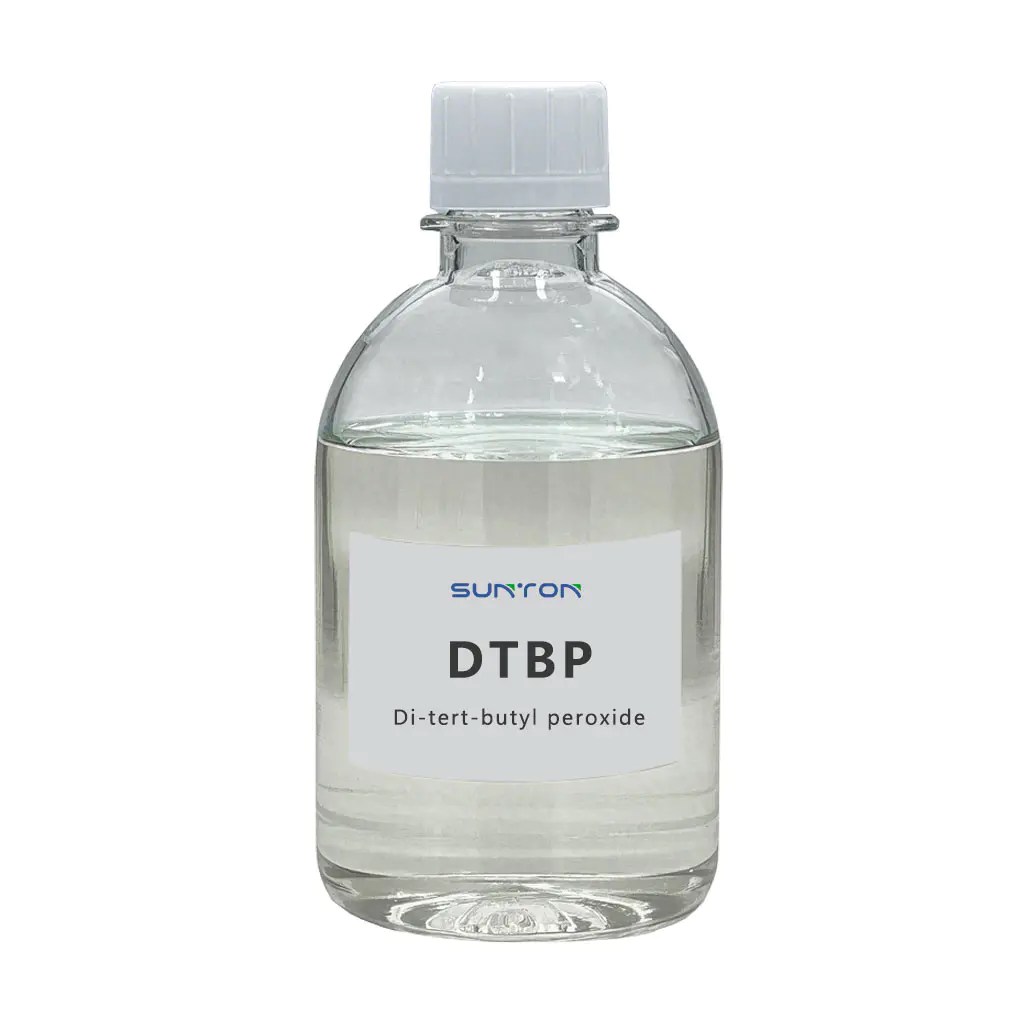
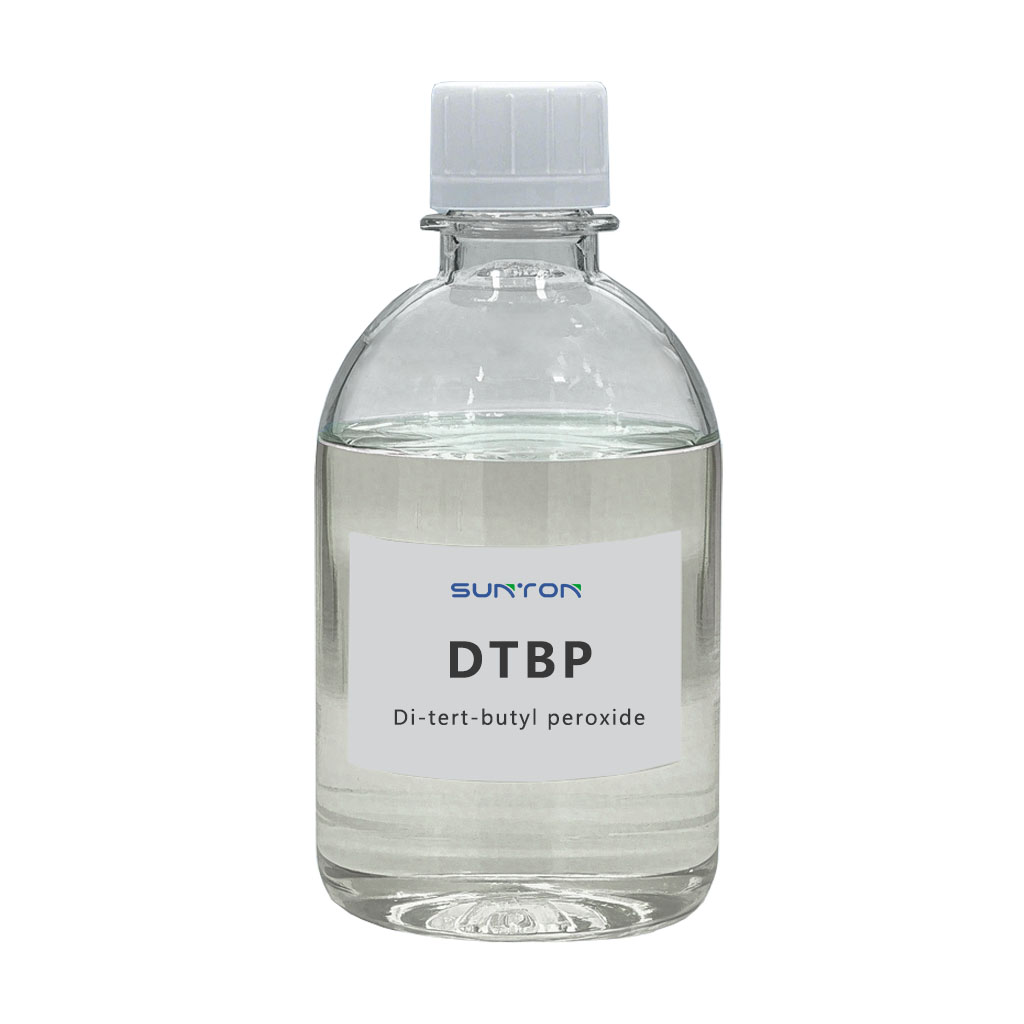
Di-tert-butyl peroxide, commonly abbreviated DTBP, is an organic peroxide used primarily as a radical initiator and crosslinking agent in polymer chemistry. It's a colorless liquid at room temperature with a characteristic sharp odor, valued industrially for its relatively high thermal decomposition temperature compared to many other common organic peroxides.
That higher decomposition threshold is a defining trait: it allows DTBP to remain stable through processing steps that would prematurely trigger lower-temperature peroxides, making it a common choice for high-temperature polymerization and curing processes.
Key Physical and Chemical Properties
| Property | Typical Value |
|---|---|
| Appearance | Colorless to pale liquid |
| Boiling point | ~110-112°C |
| Active oxygen content | ~10.9% |
| Solubility in water | Practically insoluble |
| Classification | Organic peroxide (oxidizing/flammable hazard class) |
How DTBP Functions as a Radical Initiator
Like other organic peroxides, DTBP works by decomposing under heat to form free radicals — highly reactive oxygen-centered species that kick off chain reactions in polymerization or crosslinking processes. The relatively high decomposition temperature of DTBP means the radical generation happens later in a heating cycle than it would with faster-decomposing peroxides, giving processors a wider temperature window to work within before the reaction initiates.
This controlled, delayed onset is part of what makes DTBP suitable for processes involving extrusion or molding at elevated temperatures, where a lower-temperature initiator might trigger prematurely during processing rather than at the intended curing stage.
Common Industrial Applications
- Polymer crosslinking: Used to crosslink polyethylene and other polymers in wire and cable insulation, improving heat resistance and mechanical strength.
- Rubber vulcanization: Serves as a curing agent in certain rubber compounds where peroxide curing is preferred over sulfur-based systems.
- High-temperature polymerization: Initiates polymerization reactions in processes that require a higher onset temperature than standard peroxide initiators allow.
- Fuel and combustion research: Used in some laboratory settings as a reference compound due to its well-characterized decomposition behavior.
Safety Classification and Handling Precautions
DTBP is classified as an organic peroxide under most chemical hazard systems, meaning it carries both fire and reactivity hazards distinct from ordinary flammable liquids. Key handling precautions generally include:
- Keeping the material away from heat sources, open flame, and incompatible materials such as strong acids, reducing agents, and metal salts.
- Using appropriate personal protective equipment, including eye protection and chemical-resistant gloves, when handling the concentrated liquid.
- Ensuring adequate ventilation in storage and handling areas due to vapor accumulation risk.
- Following the specific handling instructions on the current Safety Data Sheet (SDS) provided by the supplier, since formulations and concentrations vary by product grade.
Storage and Thermal Stability Considerations
Like all organic peroxides, DTBP requires temperature-controlled storage well below its decomposition onset temperature to prevent self-accelerating decomposition. Storage areas are typically kept cool, shaded from direct sunlight, and separated from incompatible chemicals and ignition sources. Facilities storing DTBP at scale generally follow specific self-accelerating decomposition temperature (SADT) guidelines set out in the product's SDS to determine safe maximum storage temperature and container size limits.
Transport and Packaging Requirements
As a regulated hazardous material, DTBP shipments are subject to dangerous goods transport classifications (such as UN packing group and hazard class designations under IMDG, ADR, or IATA regulations depending on transport mode). Packaging is generally selected to maintain temperature control during transit and to meet the specific UN-rated container requirements for organic peroxides, with quantity limits per package often stricter than for standard flammable liquids.
Choosing a Reliable DTBP Supplier
- Confirm the supplier provides an up-to-date SDS matching the exact product grade and concentration being purchased.
- Ask about batch-to-batch purity consistency and available certificates of analysis for quality-sensitive applications.
- Verify the supplier's experience with proper cold-chain or temperature-controlled logistics for hazardous chemical shipments.
- Check regulatory registration status (such as REACH or equivalent regional chemical registrations) relevant to your destination market.
Recommended products
-
2,3-Dimethyl-2,3-Diphenylbutane (Dicumene)
-
Benzene,1,4-bis(1-methylethyI)-,Homopolymer
-
2-Hydroxyethylhydrazine
-
Acethydrazide
-
Tert-Butyl peroxybenzoate(TBPB)
-
Benzoyl Peroxide(BPO)
-
1,2-Hexanediol
-
Pentylene Glycol
-
Caprylohydroxamic Acid
-
Melamine Cyanurate
-
Di-Tert-Butyl Peroxide(DTBP)
-
XPS Special Masterbatch
COMPANY PROFILE
CONTACT INFO
- Phone: +86 18114870532
- Tel: +86 510-86686637
- Email: [email protected]
- Add: No.5 Shuangquan village, Diaoqi village., Xuxiake Town, Jiangyin, Jiangsu, China

Copyright © Jiangsu Suoteng New Material Technology Co., Ltd. All Rights Reserved.Custom Chemicals Organic Compounds Manufacturers
 Disclaimer
Privacy
苏ICP备2024090995号
Disclaimer
Privacy
苏ICP备2024090995号